
Page title
Training approach
The University of Chicago Internal Medicine Residency Program is dedicated to achieving three predominant aims: excellence in patient care, leadership in medical research, and distinction in scholarship and education.
left
no-repeat;left top;;
auto
0px
Overview
At University of Chicago, an emphasis is placed on learning by doing. This educational philosophy of resident autonomy and responsibility runs through all three years of the program. Residents are constantly challenged to solve problems on their own, but are backed by an accessible, full-time faculty interested in and responsible for teaching residents. Click below to read about our:
4+2 training model
Vital stats about the program
Program highlights
Teaching conferences
Rotations
left
no-repeat;left top;;
auto
4+2 model
The 4+2 Curriculum Model
no-repeat;left top;;
auto
0px
4+2 model
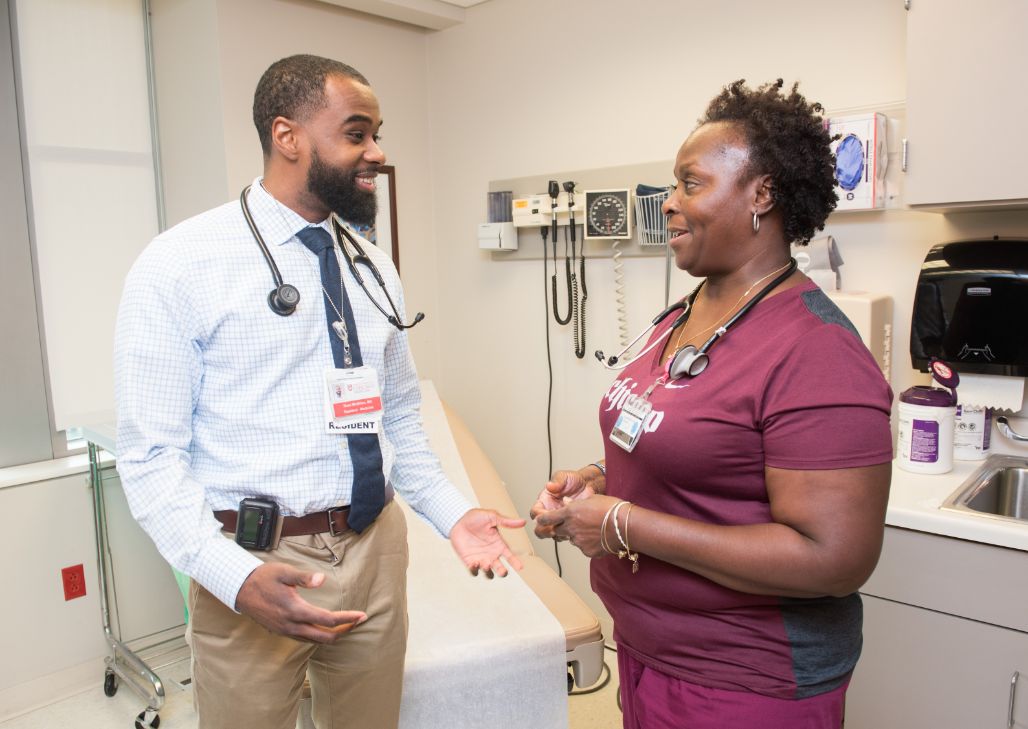
Beginning in July 2013, our residency program moved to a “4+2” curriculum model. In this model, residents have their inpatient and outpatient rotations completely separated. Residents alternate between a 4-week block of inpatient care and consults and a 2-week block of dedicated outpatient ambulatory medicine. Benefits and highlights of the 4+2 model include the following:
Ambulatory training time is protected and includes at least one administrative/reading half-day per week.
Outpatient needs, such as prescription refills and paperwork, are covered by a colleague while residents are rotating on inpatient blocks.
Not having ambulatory clinics during inpatient rotations helps preserve the inpatient team structure.
PGY1 and PGY2 residents have a year-long longitudinal experience in a sub-specialty clinic during their ambulatory blocks.
no-repeat;left top;;
auto
Vital statistics
Vital statistics
The Department of Medicine has 42 first-year residency positions (34 categorical, 7 preliminary, and 4 medicine/pediatrics) and maintains over 200 beds at the University of Chicago Medical Center. Medical patients are assigned to a first-year resident (intern) who is supervised by an advanced resident and an attending physician.
First year residents typically admit 5 new patients per call cycle and care for 7-10 patients at a time. First year residents start building their continuity clinic panel in the Primary Care Group during their first year. In the 4+2 curriculum, ambulatory training now spans the entire three years of residency
no-repeat;left top;;
auto
first-year residency positions
The Department of Medicine has 42 first-year residency positions, including 34 categorical, 7 preliminary, and 4 medicine-pediatrics positions.
42
beds at UChicago Medical Center
The Department of Medicine maintains 624 beds and 52 ICU beds at the University of Chicago Medical Center.
624
new patients per call cycle
First year residents typically admit 5 new patients per call cycle.
5
patients per first-year resident
First year residents typically care for 7-10 patients at a time.
7
Program highlights
Program highlights
no-repeat;left top;;
auto
10px
Continuity clinic begins first year
h5
Continuity clinic begins during the first year. First year residents acquire a cohort of patients that they follow throughout the three years of training. Continuity clinics are based on campus, at the Primary Care Group, which serves Chicago’s south side and the surrounding areas.
icon-lamp
top
Sub-specialty training
h5
Sub-specialty training at the University of Chicago Medical Center is unique in that residents have the opportunity to rotate on dedicated inpatient services run by the sections of Cardiology and Hematology / Oncology. Residents also spend time on inpatient general medicine. Through these opportunities, residents receive rigorous training in a broad range of medical problems.
icon-lamp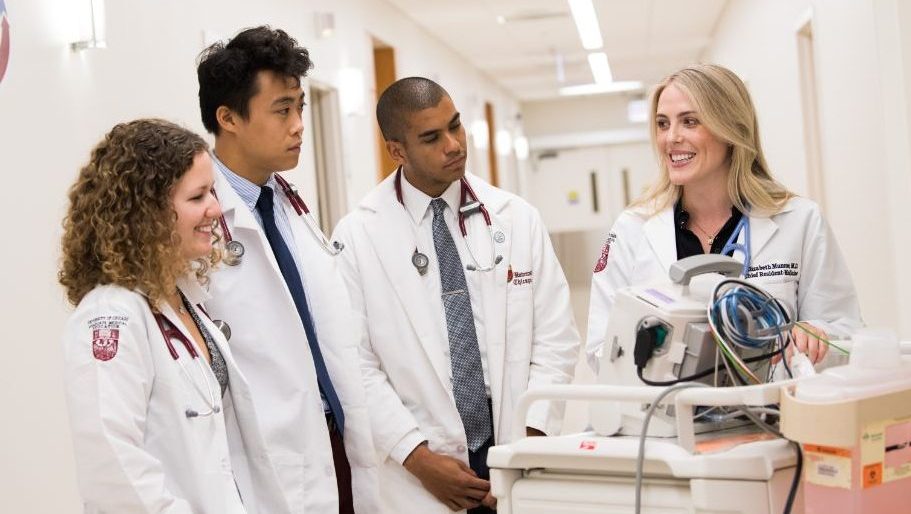
top
Outpatient clinic and consultation
h5
Each section in the Department of Medicine has its own outpatient clinic and consultation service through which residents can rotate on consultation, ambulatory, or elective rotations.
icon-lamp
top
Medical Intensive Care Unit
h5
The Section of Pulmonary and Critical Care Medicine operates a 24-bed Medical Intensive Care Unit in which patients from all services receive care. The Medical ICU is housed in the Center for Care and Discovery.
icon-lamp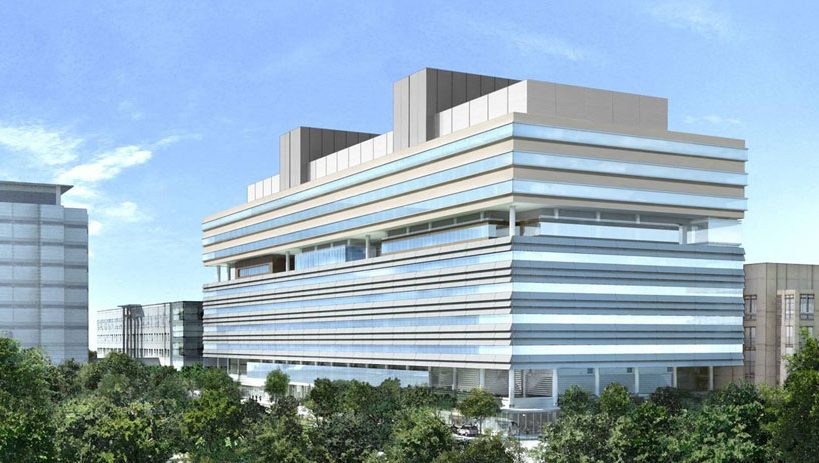
top
Fully equipped Cardiac Care Unit
h5
The Cardiac Care Unit has beds fully equipped for invasive hemodynamic and electrophysiologic monitoring. The case mix includes post-PCI patients, patients with balloon pumps, pre- and post-transplant patients, and patients on ECMO, Impella, and other advanced cardiac assist devices.
icon-lamp
top
South Shore Senior Center rotation
h5
Residents participate in a geriatrics curriculum through outpatient rotation(s) at the South Shore Senior Center. This curriculum also includes formal nursing home experiences.
icon-lamp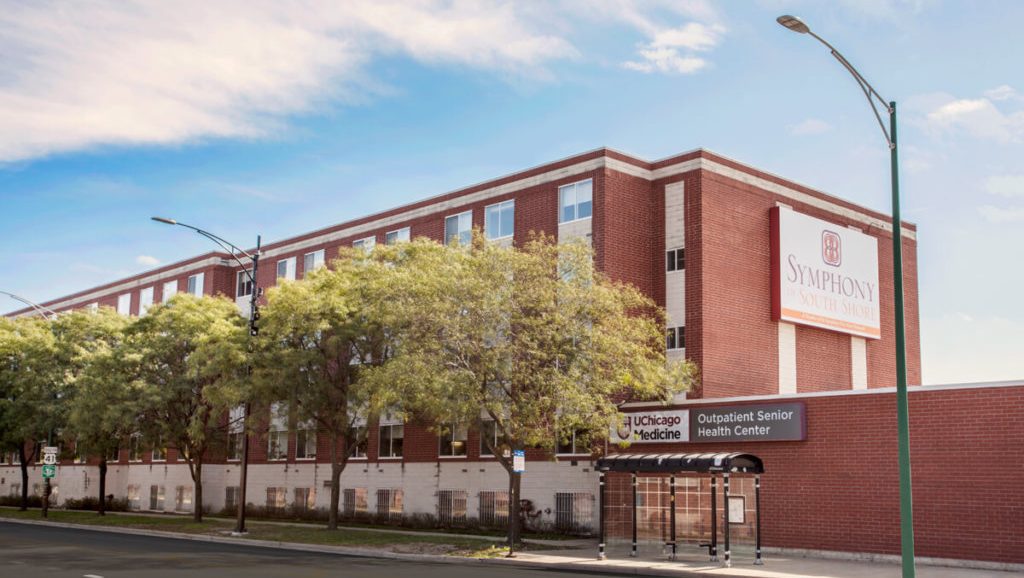
top
Ten weeks elective and research time
h5
Over three years, each categorical resident has a total of ten weeks of elective / research time.
icon-lamp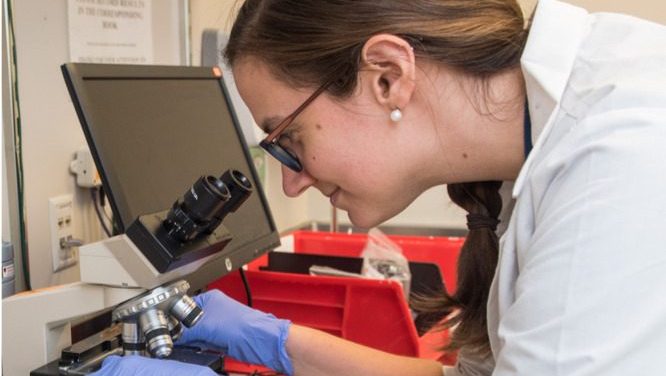
top
Board and ACGME accredited
h5
The housestaff program is in accord with the requirements of the American Board of Internal Medicine. The program is fully accredited by the Accreditation Council for Graduate Medical Education.
icon-lamp
top
Teaching conferences
Teaching conferences
Teaching conferences complement daily attending rounds. A wide variety of teaching conferences are available to residents.
no-repeat;left top;;
auto
10px
Daily Morning Report is the most popular conference among residents. Every day, a resident prepares and presents a case to colleagues, the chief resident, and an attending physician. As you will see on your interview day, residents engage in vibrant discussion and debate during these sessions.
Morbidity and Mortality Conference and Clinical Pathophysiology Conferences are other favorites among the housestaff. These conferences occur once every three months and focus on both pathologic correlations to clinical disease and on quality control and process improvement. Discussants include faculty from multiple medicine disciplines, residents, and pathologists.
no-repeat;left top;;
auto
0px

Lunchtime lectures – Residents also attend daily lectures on various topics in internal medicine. These lectures are given by both general medicine physicians and subspecialists.
Daily subspecialty teaching conferences also take place on the wards, for residents rotating in the ICUs and on the Cardiology and Hematology/Oncology inpatient services.
Lectures on basic management of common outpatient diseases – During the ambulatory rotation, residents participate in an additional ambulatory curriculum that includes lectures on basic management of common outpatient diseases as well as instruction in evidence-based medicine and quality improvement. The recently retooled Evidence-Based Medicine and Journal Club, which is embedded in the ambulatory curriculum, consists of small group learning where residents discuss and analyze recent literature, landmark articles, and translational research with an attending discussant.
no-repeat;left top;;
auto
0px
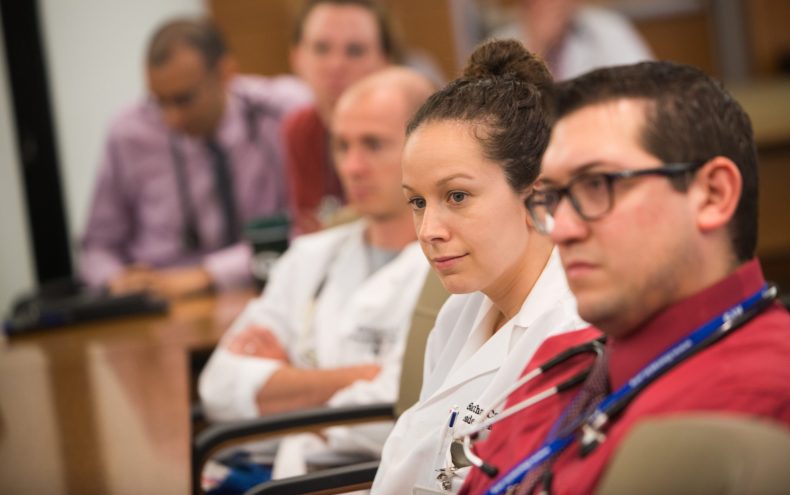
Our new weekly Face Off conference series is a forum for two attendings to debate a controversial topic in their field of interest.
Board Review is a chief resident-run series of weekly reviews preparing second- and third-year residents for the ABIM exam. A fellow is present to assist with discussion.
Weekly Intern Report provides protected time during which interns gather to discuss a recent case with the help of an attending and chief resident.
Monthly firm meetings provide an opportunity for each of the firms in the 4+2 model to discuss outpatient care and other special topics.
no-repeat;left top;;
auto
0px
Rotations
Rotations
All residents may indicate preferences for specific rotations, and most schedule requests can be accommodated.
Continuity clinic begins during the first month of residency. Altogether, internship training usually consists of:
no-repeat;left top;;
auto
10px
Rotations
Time
Inpatient General Internal Medicine
3 months
Subspecialty Inpatient Medicine (including Hematology-Oncology and Cardiology)
2 months
Ambulatory Care
3 months
Medical ICU
4-6 weeks
CCU
2-4 weeks
Consults
4-6 weeks
Emergency Medicine
2 weeks
Vacation
4 weeks
no-repeat;left top;;
auto
Rotations
Second and third year residents rotate in 2- or 4-week intervals through each of the subspecialty and general medicine inpatient services, the medical ICU and CCU, and most consultation services. Inpatient time is interspersed with two week ambulatory blocks, as part of the 4+2 curriculum model. Senior residents are generally given first priority for choosing rotations to ensure exposure to their areas of interest.
no-repeat;left top;;
auto